Swim
Begin at Macel or Sveti Rok, then follow the edges of the bay toward small stone platforms and quieter coves. The water is part of the town, not a separate attraction.
Northern Brač · Croatia
Where the island becomes architecture.
The essence of Pučišća
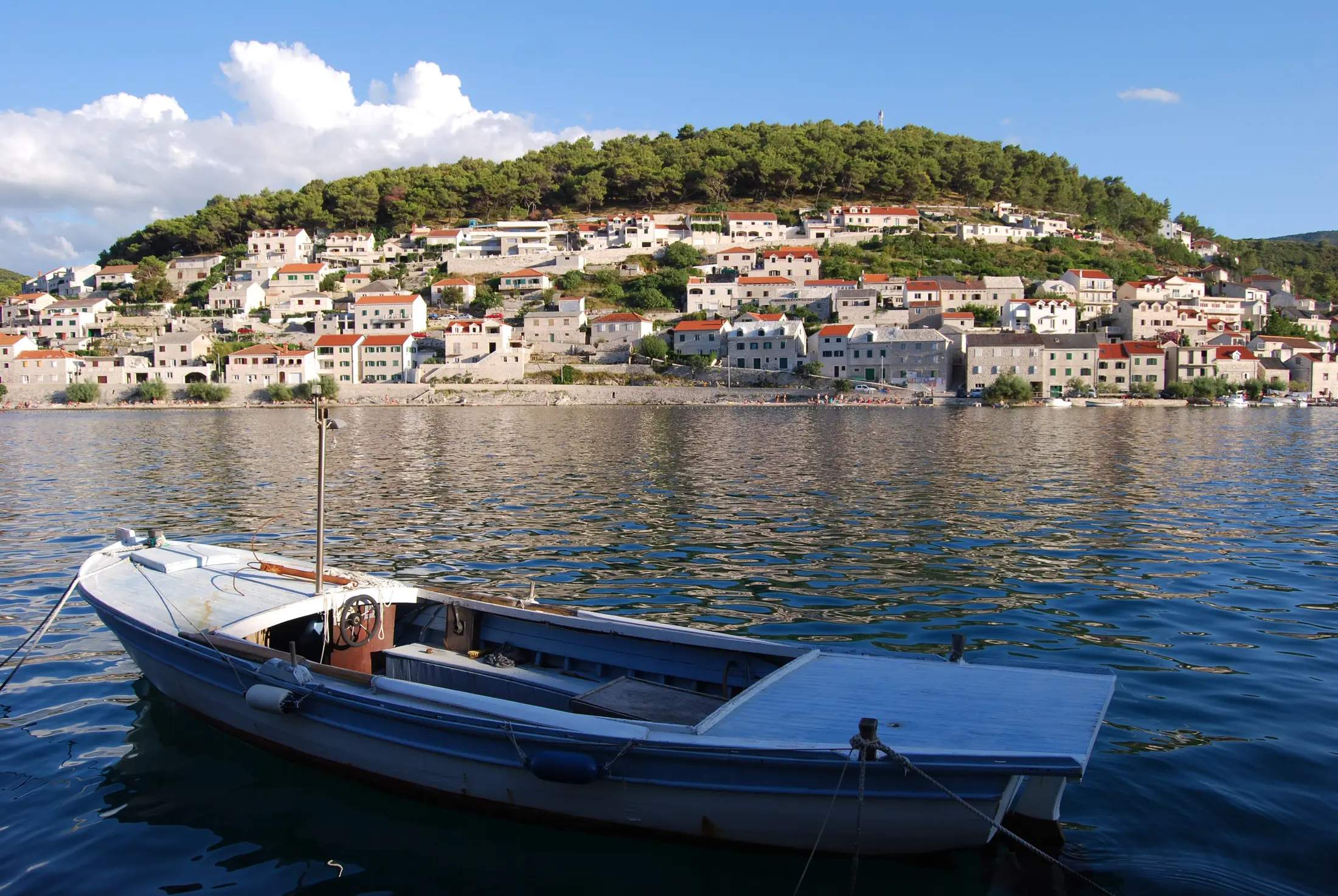
On Brač’s northern shore, the sea enters deep into the land and white limestone descends to meet it. Pučišća grew inside this protected bay — shaped by quarrymen, stonemasons, sailors and families who made the island’s material their language.
A living craft
Pučišća does not preserve stonemasonry behind glass. It teaches it, tests it and passes it on.
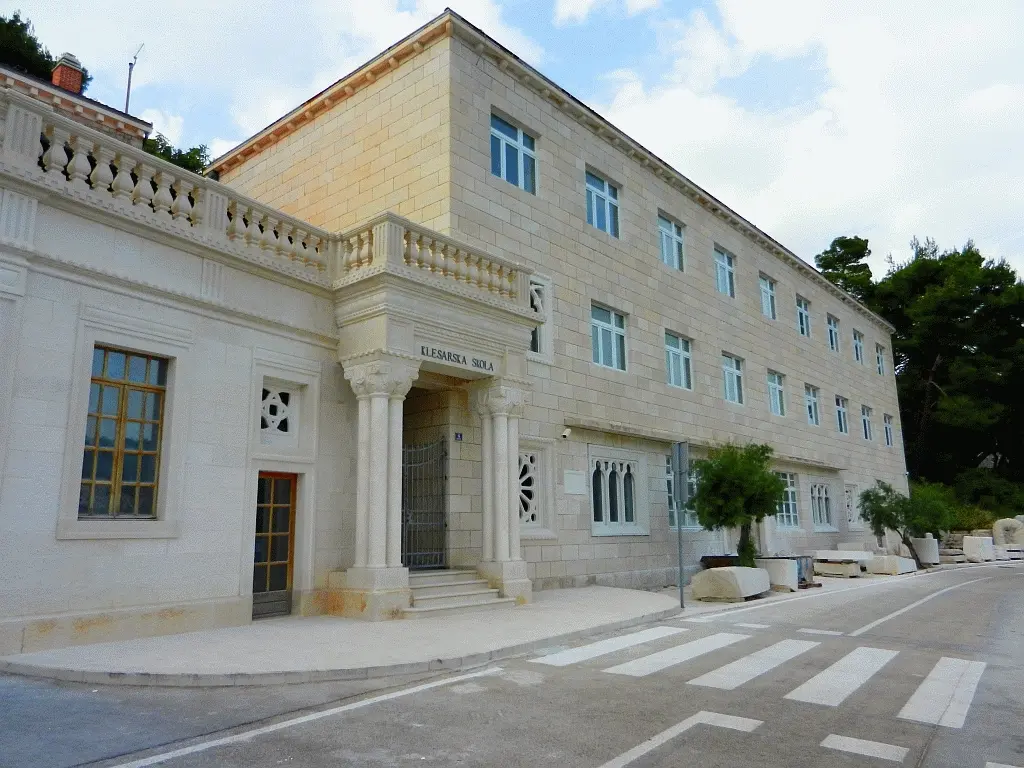
The Klesarska škola began teaching in the early twentieth century and was formally founded in 1909. Students still learn traditional hand techniques alongside modern stone technology. The result is rare: a place where heritage remains a working skill, visible in thresholds, façades, stairs, sculptures and the hands that make them.
Visit the school websiteLuka kula · Harbour of towers
The harbour was a refuge. The houses became fortresses.
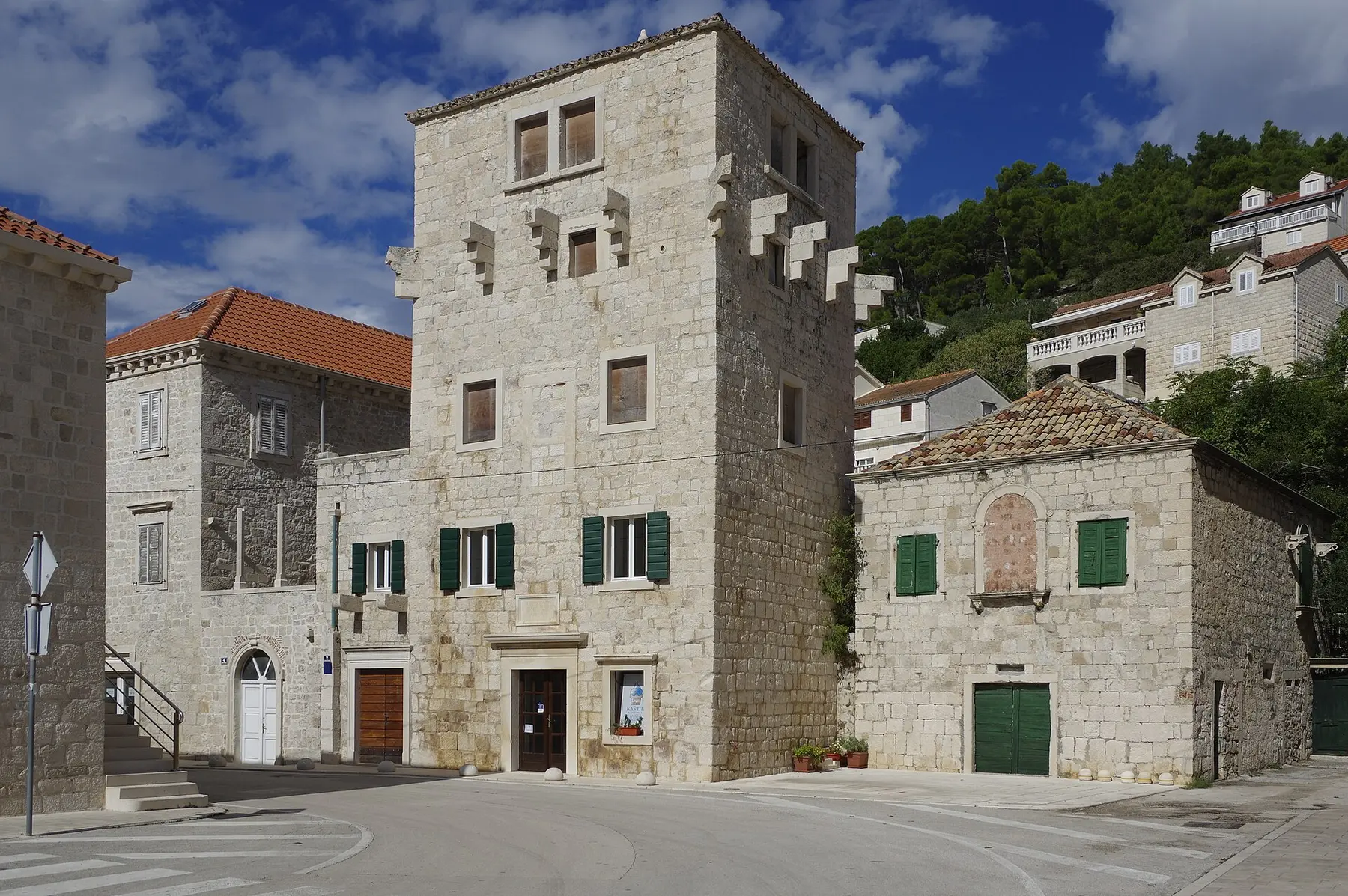
From the fifteenth century, fortified homes rose around the bay as protection from attacks at sea. The tower of Ciprijan Žuvetić, built in 1467, is the oldest preserved. Together with the surviving Akvila, Dešković and Cicarelli structures, it reveals a town whose elegance was born from necessity.
The Pučišća rhythm
The most memorable hours here are rarely scheduled: a morning swim, shade on the waterfront, the sound of a chisel, dinner after the day boats leave.
Begin at Macel or Sveti Rok, then follow the edges of the bay toward small stone platforms and quieter coves. The water is part of the town, not a separate attraction.
Trace the waterfront, climb into the old lanes, find the towers and read the craft in doorframes, balconies and roofs. The village reveals itself through detail.
Choose simply: grilled fish, local olive oil, Brač lamb, rožata, sugared almonds and citrus-peel arancini. Island food makes most sense when it stays close to its source.
A slow three-day edit
Pučišća rewards time more than checklists. Use this as a rhythm, not an itinerary.
Walk both sides of the harbour. Swim before sunset. Let dinner run late on the waterfront.
Visit the stonemasonry school when open, seek the towers, then climb beyond the riva for a different view of the town.
Explore nearby coves and inland villages, or take to the water. Return for one final evening in the harbour.
Before you arrive
Practical details change with the season. Use official sources for live timetables, then keep the rest of the plan deliberately light.
Most visitors reach Brač by ferry to Supetar, then continue across the island by road. Always check the current Jadrolinija and local transport schedules.
For warm days and a quieter waterfront, look beyond the busiest weeks. July and August carry the fullest summer energy; spring and autumn reveal a more local pace.
Choose a room or house within walking distance of the riva. The value of Pučišća is the ability to leave the car, hear the harbour wake and swim before breakfast.
Respect residential lanes, conserve water, avoid disposable plastics, use marked paths and support local makers, hosts and kitchens.
Pučišća, at a glance
Pučišća is a harbour village on the northern coast of Brač, an island in Dalmatia, Croatia. It is known for its white limestone buildings and stonemasonry tradition.
Take the ferry from Split to Supetar on Brač, then continue by road to Pučišća. Check current ferry departures with Jadrolinija and confirm your onward transport before travelling.
The school welcomes visitors, but it is also a working educational institution. Check current visiting arrangements directly with Klesarska škola before you go.
Macel and Sveti Rok are two town beaches. Check local conditions before swimming and keep clear of boat traffic in the harbour.
Pučišća · Island of Brač
Use this independent guide to begin. For current events, opening hours and official visitor information, continue with the Tourist Board of Pučišća.